

The way people travel is changing fast. In 2026, eco-conscious tourism is no longer a niche preference reserved for a small group of travellers. It has become a mainstream expectation, and the sustainable holiday let Sussex market is growing year on year. From choosing flights with carbon offset options to actively seeking out green accommodation, today’s guests are making environmentally responsible choices at every stage of their journey. For property owners in Sussex, this shift represents both a responsibility and a genuine commercial opportunity. If you are looking for expert support in capitalising on this trend, our Holiday Let Management Services are a great starting point.
The good news is that embracing sustainability in your holiday let does not just help the planet. It can also boost your bookings, command higher nightly rates, and meaningfully reduce your running costs. Whether you own a flint-walled cottage near Arundel, a farmhouse barn in the Weald, or a coastal apartment in Brighton, this guide walks you through everything you need to know about building a genuinely eco-friendly holiday let in 2026.
1. The Growing Importance of Sustainability in Holiday Lets
Sustainability has moved firmly to the top of the agenda for both travellers and property owners across the UK. Booking platform research consistently shows that a significant majority of global travellers now want to stay in eco-friendly accommodation, and that figure is particularly high among younger, higher-spending visitors who make up a growing share of Sussex’s guest market.
In Sussex, the push to go green comes from several directions:
• Guest demand is rising sharply, with eco-conscious travellers actively filtering for green tourism Sussex options on platforms like Airbnb and Booking.com.
• Booking platforms have introduced sustainability badges and dedicated filters that make eco credentials more visible than ever before.
• Local councils and national government are increasing environmental expectations for short-term rental properties, including tighter Energy Performance Certificate (EPC) requirements on the horizon.
• The spectacular natural landscapes of Sussex, from the South Downs National Park to the Seven Sisters chalk cliffs, deserve to be protected by the people who profit from them.
Holiday lets that can demonstrate genuine green practices are increasingly standing out in a competitive market and attracting the kind of discerning, respectful guests that every property owner wants. To see how Huluki Sussex Stays supports owners in building greener and more profitable properties, explore our Environmental Improvements page.
2. Eco-Friendly Practices to Implement in Your Holiday Let
Many sustainable upgrades pay for themselves over time through reduced energy and water bills. Here are the key areas to focus on when transforming your property into an eco-friendly holiday let.
Energy Efficiency
• Replace all lighting with LED bulbs, which use up to 90% less energy than traditional incandescent bulbs and last significantly longer.
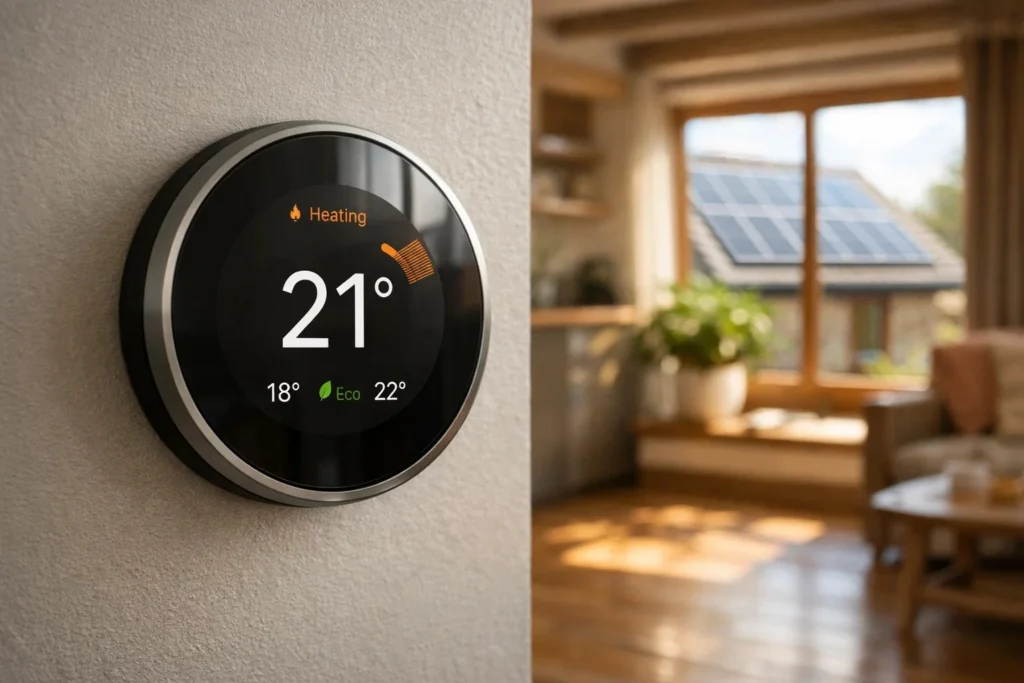
• Install a smart thermostat such as Hive or Nest to allow remote temperature control and prevent energy waste between guest stays.
• When appliances need replacing, choose A-rated energy-efficient models for washing machines, dishwashers, and fridges.
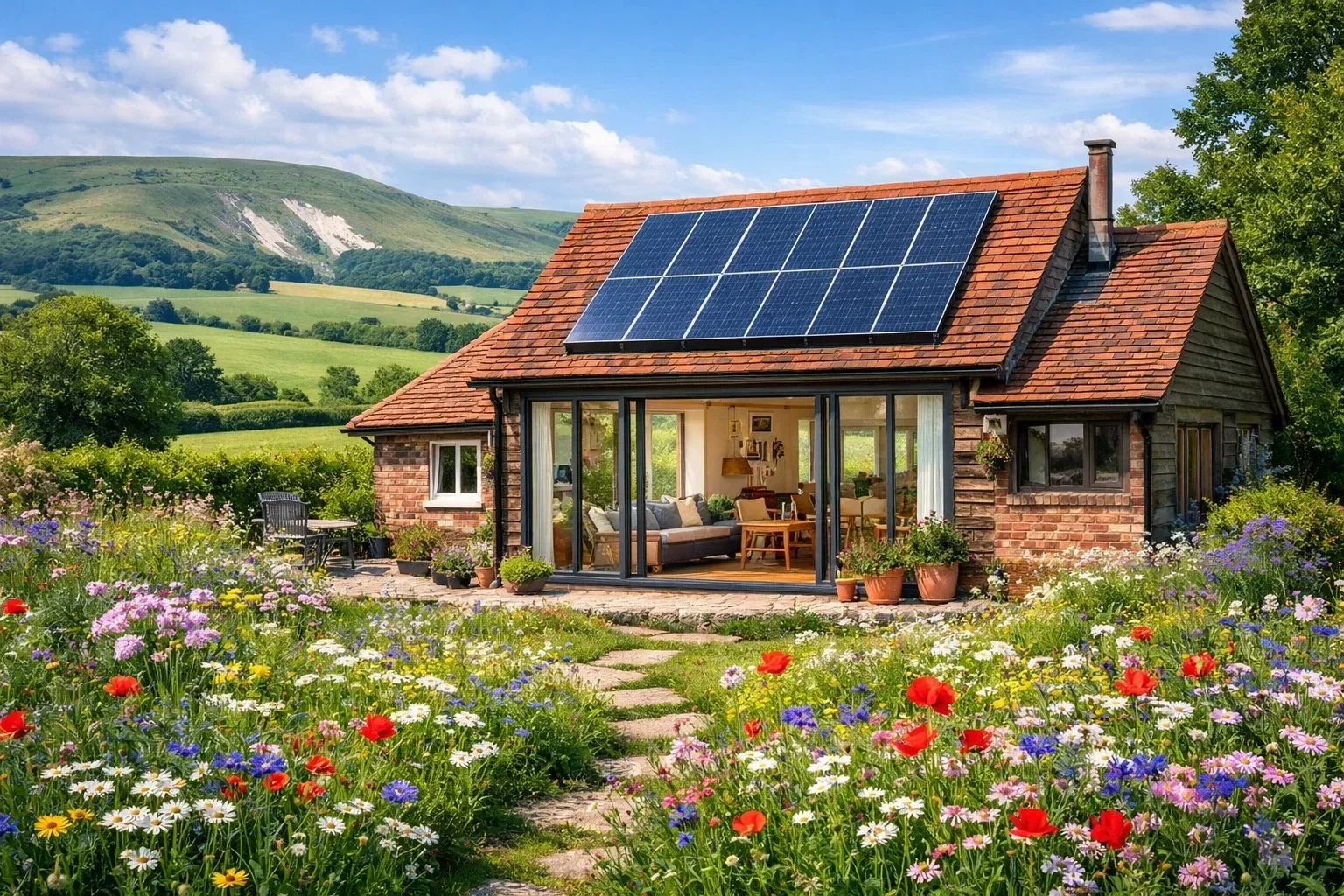
• Consider solar panels if your property is suitable. With the Smart Export Guarantee (SEG) now in place, you can earn money by feeding surplus energy back to the grid.
Water Conservation
• Fit low-flow showerheads and tap aerators to reduce water usage without affecting guest comfort.
• Install a water butt in the garden to collect rainwater for irrigation, reducing reliance on the mains supply.
• Switch to eco-friendly, phosphate-free laundry detergents and cleaning products to reduce water pollution.
Waste Reduction
• Provide clearly labelled recycling bins for glass, plastic, paper, and food waste.
• Eliminate single-use plastic from your property by switching to refillable toiletry dispensers and reusable bags.
• Offer a composting option for food scraps, particularly if your property has outdoor space.
Eco-Friendly Cleaning and Sustainable Furnishings
• Switch to natural, chemical-free cleaning products from brands such as Ecover or Method.
• When refreshing your interiors, choose furniture made from sustainably sourced timber (look for FSC certification), natural fibres, or upcycled pieces from local Sussex makers.
• Opt for biodegradable materials and recycled decor wherever possible to reduce the environmental footprint of your interiors.
These improvements reduce your environmental footprint, enhance the guest experience, and can justify higher nightly rates. For more practical inspiration on property enhancements, read our blog on How to Transform Your Property into a Holiday Let.
3. Marketing Your Sustainable Holiday Let in Sussex
Implementing eco-friendly practices is only half the battle. You also need to promote them clearly and confidently. Guests who specifically search for sustainable holiday lets in Sussex will not book your property if they cannot tell it is green.
Here are the most effective ways to market your green credentials:
• Highlight eco features prominently in your listing description. Use phrases such as ‘solar-powered’, ‘plastic-free’, ‘EV charging available’, or ‘eco-certified cleaning products’ early in your copy.
• Apply for sustainability badges on Airbnb and Booking.com. Both platforms allow hosts to flag specific green features, and these are increasingly used by guests to filter their searches.
• Use photography to showcase visible green features such as solar panels, a vegetable garden, bike storage, or a wildflower garden. These signal sustainability at a glance.
• Create a green welcome guide for guests explaining your eco features, local recycling information, and tips for exploring Sussex sustainably, including public transport options and nearby farm shops.
• Use social media to share your sustainability journey. Authentic content about upgrades and eco credentials builds trust and attracts like-minded guests who are willing to pay a premium.
For a full overview of promotion strategies tailored to the Sussex market, read our blog post on How to Market Your Holiday Let in Sussex in 2026. You can also find useful guidance on Airbnb management in Brighton if you are listing on that platform.
4. Government Incentives and Grants for Sustainable Property Upgrades
One of the strongest arguments for going green is the financial support available to UK property owners. Here are the key schemes to be aware of in 2026. Always check official government sources and consult a financial adviser for the most current eligibility details, as schemes and their terms can change.
• The Boiler Upgrade Scheme (BUS) provides grants of up to £7,500 towards the cost of an air source or ground source heat pump in England and Wales. The scheme runs until at least 2028 and has a budget of £295 million for 2025/26. It is installer-led, meaning your chosen MCS-certified installer applies on your behalf and deducts the grant from your invoice. The BUS was also expanded in late 2025 to include air-to-air heat pumps (£2,500 grant) and heat batteries (£2,500 grant), broadening the options available to property owners. See full details at Ofgem.
• The Great British Insulation Scheme (GBIS) provided government-backed funding for insulation upgrades. The GOV.UK referral service closed in October 2025, with the scheme officially ending 31 March 2026. If you have not yet explored this, contact your energy supplier directly to check whether any remaining capacity is accessible for your property.
• The Smart Export Guarantee (SEG) means that if you install solar panels, you can receive payments from your energy supplier for surplus electricity exported to the national grid, turning your renewable investment into an ongoing income stream.
• Zero VAT on energy-saving materials applies to eligible products and installations from May 2023 until March 2027, reducing the cost of solar panels, insulation, heat pumps, and more.• HMRC capital allowances may be relevant for furnished holiday let owners investing in energy-efficient equipment. Always consult a qualified tax adviser for the most current guidance, particularly following recent changes to furnished holiday let tax rules.
Improving your property’s Energy Performance Certificate (EPC) rating is also increasingly important from a regulatory perspective. Staying ahead of upcoming minimum EPC requirements will protect the long-term viability of your holiday let in Sussex. For more information on registration and compliance, visit our guide on the Holiday Let Registration Scheme for England 2026. You may also find our post on Tax Relief for Furnished Holiday Lets and Understanding the Latest Budget Update for FHL Owners useful reading.
5. Sustainable Tourism in Sussex: How to Tap Into a Growing Market
Sussex is perfectly positioned to become one of England’s leading eco-tourism destinations. The county is home to the South Downs National Park, the High Weald Area of Outstanding Natural Beauty, miles of protected coastline, and a thriving scene of sustainable food producers, independent breweries, and farm-to-table restaurants.
Eco-conscious travellers visiting Sussex are looking for more than just a place to sleep. They want an experience that aligns with their values. As a holiday let owner, you can tap into this by:
• Providing a curated local guide featuring sustainable businesses such as organic farm shops, zero-waste cafes, nature reserves, and cycling routes through the South Downs.
• Partnering with local eco-tourism operators to offer recommended experiences such as guided foraging walks, wildlife photography tours, or visits to sustainable vineyards in the Weald.
• Installing an EV charging point, which is increasingly expected by eco-conscious travellers and serves as a genuine differentiator in your listing.
• Offering bikes or recommending local cycle hire to encourage guests to explore Sussex car-free, reducing the environmental impact of their stay.• Highlighting local, seasonal food experiences in your welcome pack. Sussex has a rich food and drink culture that eco-tourists love to discover.
These guests tend to be respectful of properties, stay for longer, and are willing to pay a premium for an authentic, sustainable experience. For inspiration on local activities to recommend to your guests, take a look at our Insider’s Guide to Exploring Arundel, our guide to the Best Local Food and Drink in Sussex, and our post on Experiencing the History and Culture of Sussex.
6. Challenges and Solutions in Implementing Sustainable Practices
Adopting sustainable practices in your holiday let is not always straightforward. Here are the most common challenges property owners raise, along with practical solutions for overcoming them.
Upfront Costs
• The initial investment in solar panels, heat pumps, or a full appliance upgrade can feel significant. The solution is to phase in changes gradually, prioritising upgrades with the greatest impact on energy bills and EPC rating first. LED lighting and smart thermostats are low cost and deliver immediate savings, making them ideal first steps.
• Make use of the government grants detailed in Section 4 above to offset the cost of larger investments such as heat pumps.
Finding Reliable Eco-Friendly Suppliers
• Sussex has a growing network of sustainable tradespeople and suppliers, but finding them requires research. Check local green business directories, contact the South Downs National Park Authority for recommended contractors, and ask your holiday let management company for trusted contacts in the area.
Changing Guest Habits
• Not all guests will automatically embrace your green initiatives. The key is to make sustainable choices the easy choice. Provide clearly labelled recycling stations, leave friendly information cards about your eco features, and make it simple for guests to switch off lights and heating when they leave. A positive, informative tone works far better than overloading guests with instructions.
• A well-designed green welcome guide (see Section 3) can shift guest behaviour significantly while also adding genuine value to their stay.
For broader advice on property setup and management best practices, our blog on Long-Term vs Short-Term Letting provides useful context on the benefits of the short-term rental model, while our Holiday Let Management Sussex 2026 post covers the wider landscape for property owners this year.
Conclusion
Sustainability in holiday letting is no longer optional. In 2026, it is the direction the entire market is heading, and property owners in Sussex who embrace eco-friendly practices will be better placed to attract higher-value guests, achieve stronger occupancy rates, and build a business that stands the test of time.
The benefits extend well beyond environmental impact. Lower energy bills, access to government grants, stronger marketing appeal, and premium positioning in the Sussex holiday let market all make a compelling case for going green. And in a county as naturally beautiful as Sussex, there is something entirely fitting about ensuring that the way we welcome visitors helps to protect the landscapes that draw them here.
For further reading, explore our Property Owner Case Studies to see how other Sussex owners have developed their properties, or visit our Frequently Asked Questions for Holiday Home Owners for answers to common queries.
Ready to make your Sussex holiday let more sustainable?
Contact Huluki Sussex Stays today for expert, personalised advice on transforming your property into a profitable, eco-friendly holiday let. Visit our Holiday Let Management Services page or discover what your Sussex property could earn with a free valuation today.
Leave a Reply